
Breaking down food-derived organic matter
Addressing protein, fat and carbohydrate pollutants and their contribution to COD and BOD.
Food-processing wastewater carries an organic load, including proteins, fats and carbohydrates that BIOFOX helps break down. For meat processing, dairy production and other food businesses, we tailor the programme to wastewater composition and the actual preliminary and biological treatment configuration.
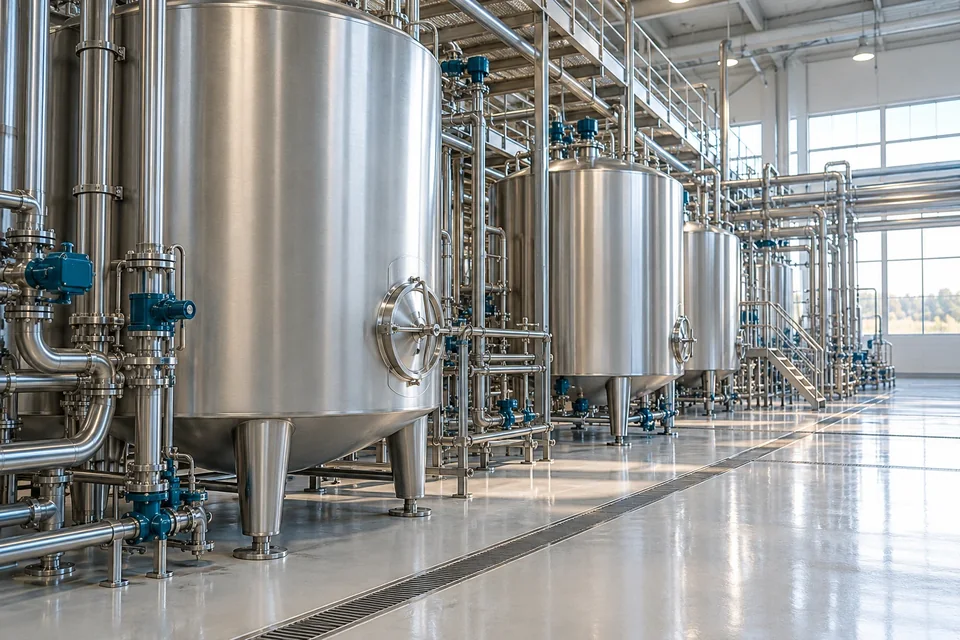
Proteins, fats and carbohydrates in wastewater. A programme tailored to the production process.
Experience at similar sitesAddressing protein, fat and carbohydrate pollutants and their contribution to COD and BOD.
Selecting a programme that accounts for actual wastewater flow and maximum and minimum loading.
We account for grease traps, oil separators, equalisation tanks and wastewater retention time.
We assess changes using analyses of incoming and treated wastewater, together with observations made by the facility.
Kitchen wastewater: sewer chambers and grease traps.
Kitchen wastewater: sewer chambers and grease traps.Less grease. A cleaner system.
Explore this storyImprove the existing industrial wastewater treatment process and reduce odours.
Process wastewater treatmentBetter treatment. Less odour.
Explore this storyKitchen wastewater: sewer chambers and grease traps.
With regular BIOFOX application, accumulated grease cleared from the sewer chambers and odour from the grease traps disappeared. Staff observed fat breakdown when opening, emptying and cleaning the equipment.
The product was added to sinks upstream of the grease traps. The hotel’s engineering team described the outcome in a letter of appreciation to its supplier.
Results and the customer’s letterBIOFOX enzymes and microorganisms help break down organic compounds in wastewater. In food production, these are primarily proteins, fats and carbohydrates; we assess the results in relation to the operation of the existing treatment facilities.
We begin with the on-site treatment configuration: where wastewater is collected, how long it stays in tanks, how fats are separated and where the water flows next. These details inform dosing locations and procedures. We then compare inlet and outlet measurements taken before chlorination.
Complete the original food-industry questionnaire and attach available analyses.
The analytical team will account for loading, tanks and grease-trap operation.
Compare wastewater quality and the process specialist’s observations under the agreed programme.
Send the original questionnaire and available data. Our analytical team will prepare individual recommendations.
Contact a specialist