
Programme outcome
Drainage samples: 9 July–24 September 2025
Successive drainage samples from one sludge bed.
Initial situation
Raw sludge, a surface crust and odour at the sludge bed.
Actions taken
Application began on 25 June 2025. Drainage samples, site observations and photographs were collected throughout the programme and follow-up period.
Application results
Drainage suspended solids decreased from 112 to 9 mg/L. A substantial reduction in odour was observed at the bed and holding tank. The report also describes separation of water and sludge.
| Parameter | 9 July 2025 | 23 July 2025 | 24 September 2025 |
|---|---|---|---|
| Suspended solids, mg/L | 112 | 23 | 9 |
Site and period
The 112 → 23 → 9 mg/L series represents drainage from one sludge bed on 9 July, 23 July and 24 September 2025. The initial holding-tank sample represents a different medium and is considered separately. Organic breakdown and nitrogen removal are assessed separately: ammonification can increase ammonium, while further oxidation requires suitable nitrification conditions.
Water and sludge separate.
Specialists observed separation of water and sludge, breakdown of the surface crust and a substantial reduction in odour. These are distinct outcomes of organic-matter treatment. Nitrogen removal is assessed separately: organic breakdown can release nitrogen in dissolved ammonium form.
The programme in photographs
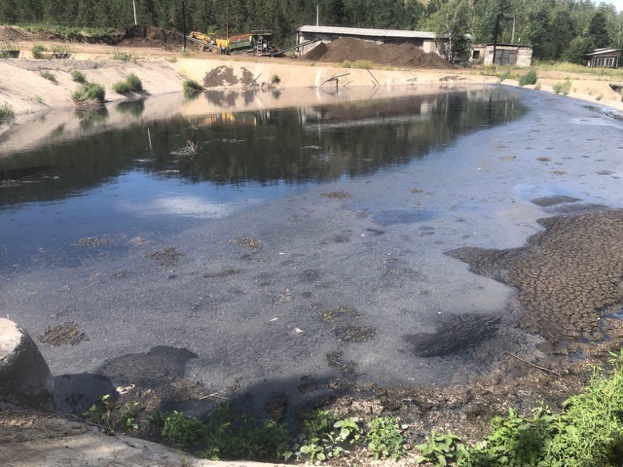
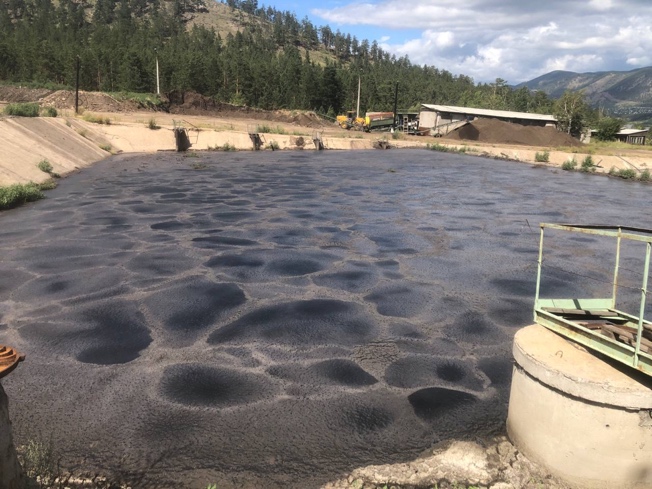
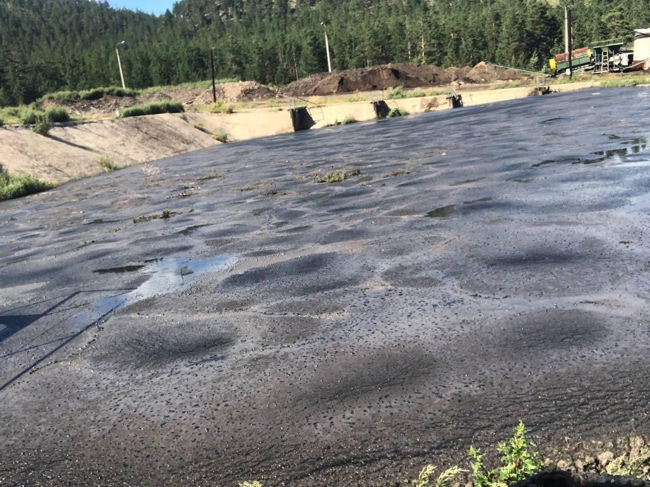
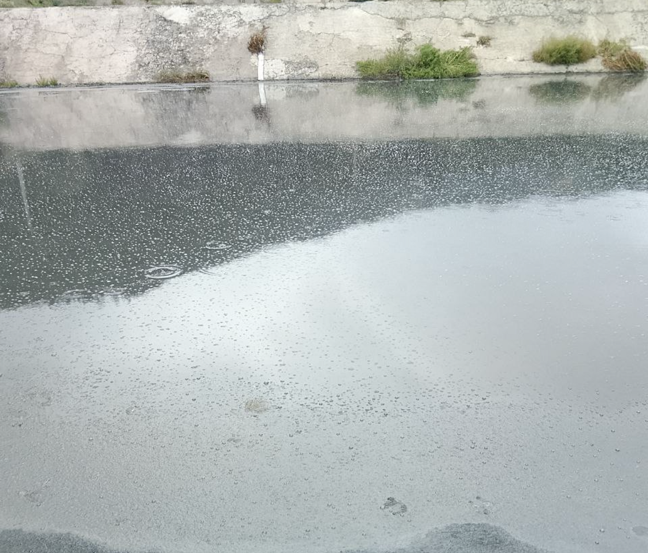
Dates follow the photograph captions. These are monitoring stages, not a controlled before-and-after comparison.
Documentary basis
Final raw-sludge treatment report, 2025; photographs from the same programme.